Services

Nine engineering disciplines, one delivery standard.

Each service below describes what we do and how we do it. Where an outcome depends on factors outside our control, we describe the method rather than promise a result.

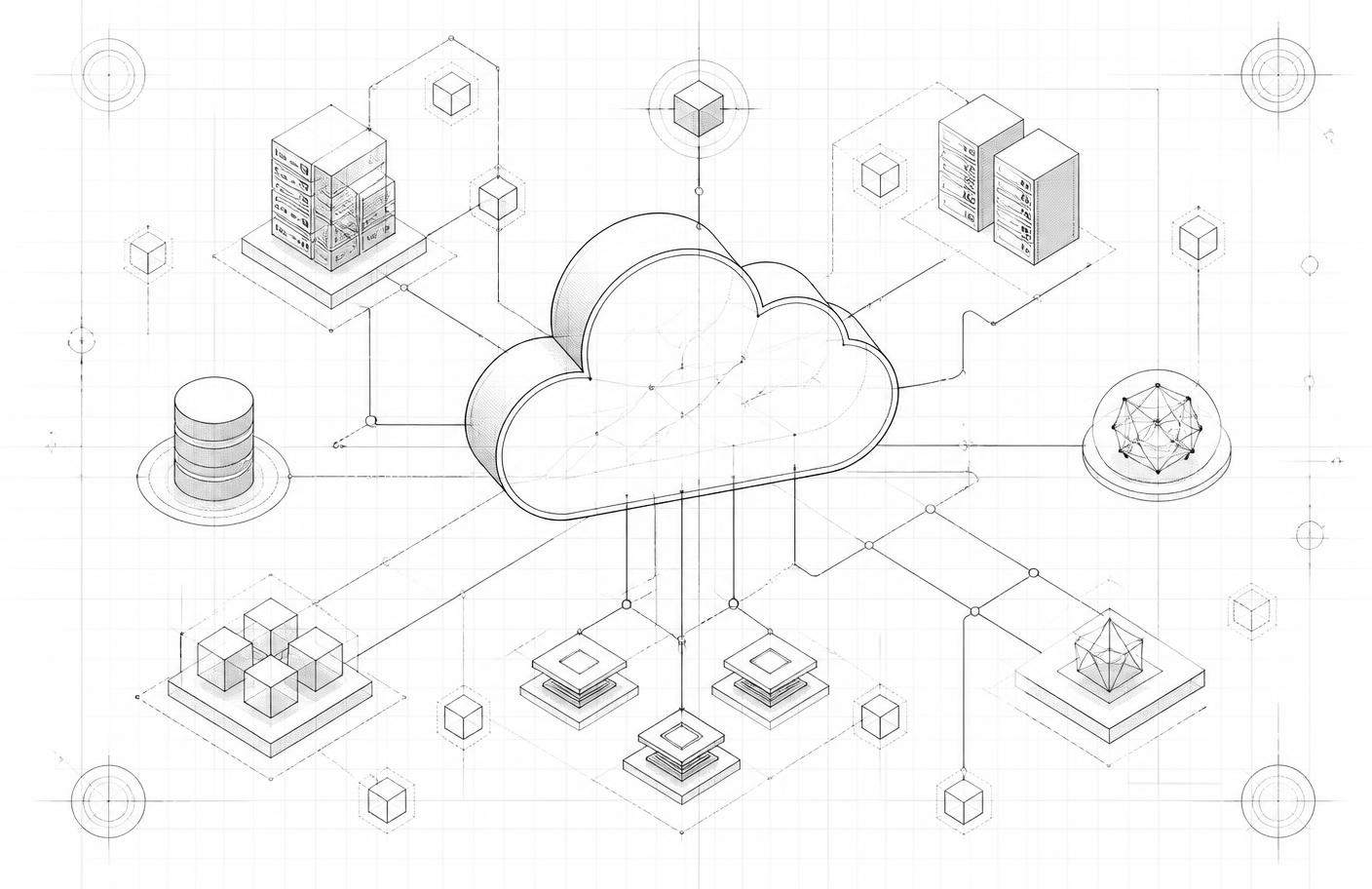
Line-drawn technical diagram of cloud infrastructure components and their connections
Fig. 01 — Services are delivered against an agreed architecture.

01Catalogue

Service catalogue

01

Custom Software Development

Applications designed around a specific operating model rather than adapted from a generic product.

We begin with the process the software has to support: the records it owns, the decisions it informs and the systems it must exchange data with. Implementation proceeds in reviewable increments, each covered by automated tests and released through the same pipeline as the previous one. The result is a codebase your own engineers can read, extend and operate.

  • Domain modelling and requirement analysis
  • Incremental delivery with acceptance criteria
  • Automated test coverage for core logic
  • Deployment and rollback procedures documented

02

Web Application Development

Responsive, accessible web platforms with a maintainable front-end architecture.

We build web applications with explicit performance budgets, semantic markup and keyboard-accessible interaction. Component structure follows a documented design system so that visual consistency does not depend on individual discipline. Server-rendered pages are used where indexability and first-load speed matter.

  • Component libraries and design tokens
  • Accessibility considered during implementation
  • Performance budgets tracked in CI
  • Progressive enhancement where appropriate

03

Cloud Solutions

Reproducible environments, containerised workloads and automated deployment.

Infrastructure is described as code and versioned alongside the application, so an environment can be recreated from the repository. We design for cost visibility, sensible scaling behaviour and clear separation between staging and production, and we document the operational procedures the platform requires.

  • Infrastructure as code and environment parity
  • Container and serverless workload design
  • CI/CD pipelines with automated verification
  • Monitoring, alerting and backup strategy

04

System Integration

Contract-first interfaces between internal systems and external services.

Integrations fail at the edges, so we specify them precisely: data ownership, message formats, idempotency, retries and the behaviour expected when a dependency is unavailable. Where systems cannot be changed, we build adapters that isolate their peculiarities from the rest of the architecture.

  • API and event contract definition
  • Idempotent, retry-safe message handling
  • Legacy adapters and anti-corruption layers
  • Integration testing against real interfaces

05

UI/UX Engineering

Interface design carried through to production code, not handed over as a picture.

We work from real tasks and real data volumes, sketching flows and states before styling them. Empty, loading, partial and error states are designed alongside the ideal path. The design system is implemented in code, so what is reviewed in a prototype is what ships.

  • Task flows, wireframes and state coverage
  • Design systems implemented as components
  • Readable typography and contrast discipline
  • Keyboard and screen-reader considerations

06

Data and Analytics Solutions

Pipelines, models and reporting surfaces built on documented definitions.

We start by agreeing what each metric means and where it comes from. Ingestion and transformation run as versioned, testable pipelines with data-quality checks, and reporting is built on top of models rather than ad-hoc queries, so numbers reconcile across dashboards.

  • Batch and streaming pipeline engineering
  • Warehouse and dimensional modelling
  • Data-quality checks and lineage documentation
  • Reporting interfaces for non-technical users

07

Cybersecurity-Oriented Development

Security treated as a design input rather than a review at the end.

We identify the assets a system holds, who may reach them and what an attacker would target, then implement accordingly: server-side authorisation, validated input, encrypted transport and storage, externalised secrets and dependency scanning in the pipeline. We describe residual risk honestly instead of claiming a system is secure in absolute terms.

  • Threat modelling per feature area
  • Least-privilege access and audit trails
  • Secret management and key rotation practices
  • Automated dependency and configuration checks

08

Technical Consulting

Independent assessment of architecture, delivery practice and technical risk.

When a decision is expensive to reverse, we review the options with you: architecture and platform choices, build-versus-buy questions, or the state of an existing codebase. The output is a written assessment with findings, trade-offs and a prioritised set of recommendations you can act on with or without us.

  • Architecture and code review
  • Delivery process and tooling assessment
  • Technical due diligence support
  • Prioritised, written recommendations

09

Software Maintenance and Modernisation

Keeping running systems healthy and moving them forward without a rewrite.

We stabilise first — reproducible builds, a test harness around critical paths, visibility into failures — and then modernise incrementally, extracting or replacing components while the system stays in service. Where a full rewrite is genuinely the better option, we say so and quantify what it involves.

  • Dependency, runtime and platform upgrades
  • Characterisation tests around legacy behaviour
  • Incremental extraction and migration
  • Ongoing support and operational handover

02Engagement

How services are combined

Most engagements draw on several of these disciplines at once. A modernisation project typically includes integration work and cloud engineering; a new product usually combines UI/UX engineering with custom development and a data model designed for later analysis.

We define the scope of each engagement in writing, including what is explicitly out of scope, and revisit it when evidence from implementation suggests a better path.

Grayscale abstract chart composition representing analytics and measurement
Fig. 02 — Reporting built on agreed definitions.

03Assurance

What we can and cannot state

Detailed monochrome photograph of structured network cabling in a patch panel
Fig. 03 — Controls are described precisely, not marketed.

We can commit to method: written architecture, reviewed code, automated verification, documented handover and defined response procedures. We can commit to transparency about progress and risk.

We do not promise that any system is immune to failure or compromise, and we do not publish figures we cannot substantiate. Where a target such as availability or response time matters to you, we agree it explicitly and design measurement for it.